KELP FIELD NOTES / SNOW PEAK CAMPFIELD
At the Edge
of the Field
A visual prelude to the Snow Peak Field Guide, observed through timber thresholds, coastal weather, camp rituals, and the quiet design language of the Pacific Northwest coast.
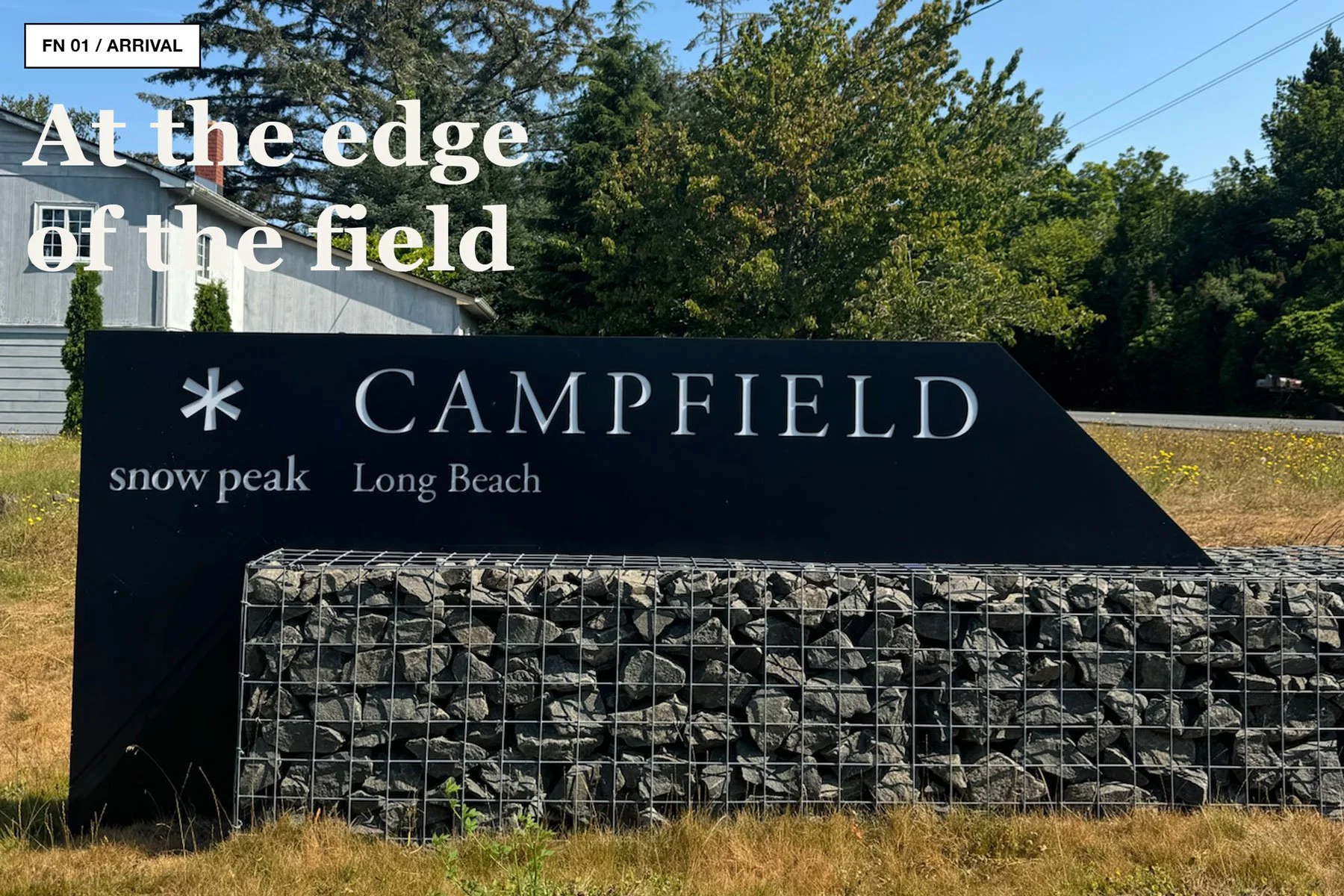
SNOW PEAK CAMPFIELD, LONG BEACH PENINSULA. THE FIELD NOTE BEGINS AT THE SIGN.
There are places that do not ask you to arrive all at once.
Snow Peak Campfield, tucked into the Long Beach Peninsula on Washington’s coast, holds that kind of threshold energy: part coastal campground, part design study, part pause before the weather changes. The camp sits on the Long Beach Peninsula, near the beach, Willapa National Wildlife Refuge, and the Discovery Trail (Snow Peak Campfield: Long Beach Peninsula).
For this Kelp Field Notes entry, we treated the trip as a prelude: a quiet visual field test for the Snow Peak Field Guide concept and a working reference point for the Pacific Northwest coast.
The trip began less as a review and more as an observation exercise. What does outdoor design look like when it is reduced to essentials? What happens when the campground is not just a place to sleep, but a spatial system: arrival, threshold, shelter, storage, path, fire, bath, meal, weather, view?
Campfield makes those questions visible.
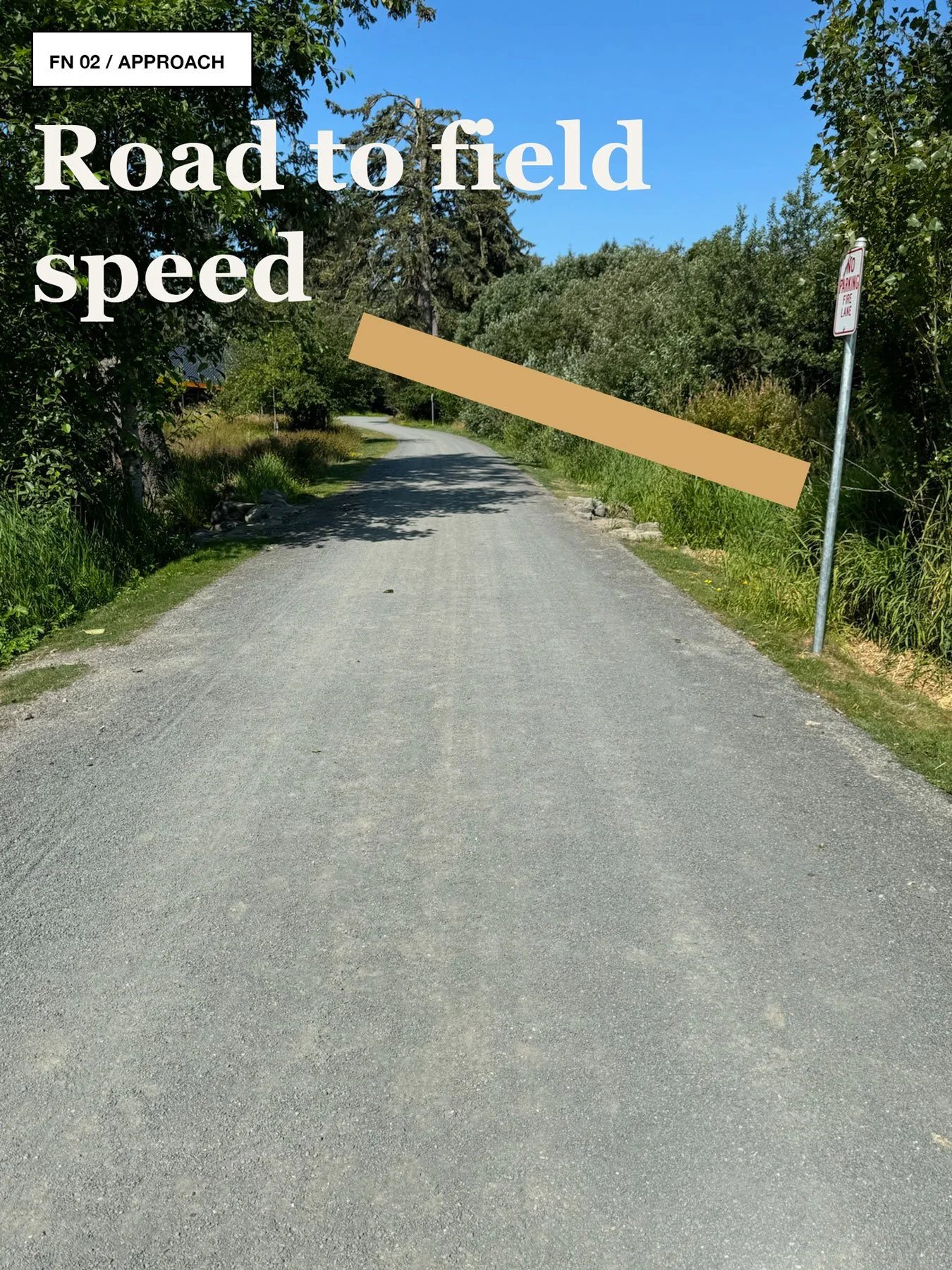
The approach slows before the camp begins. Road, shadow, field speed.
The Arrival Sequence
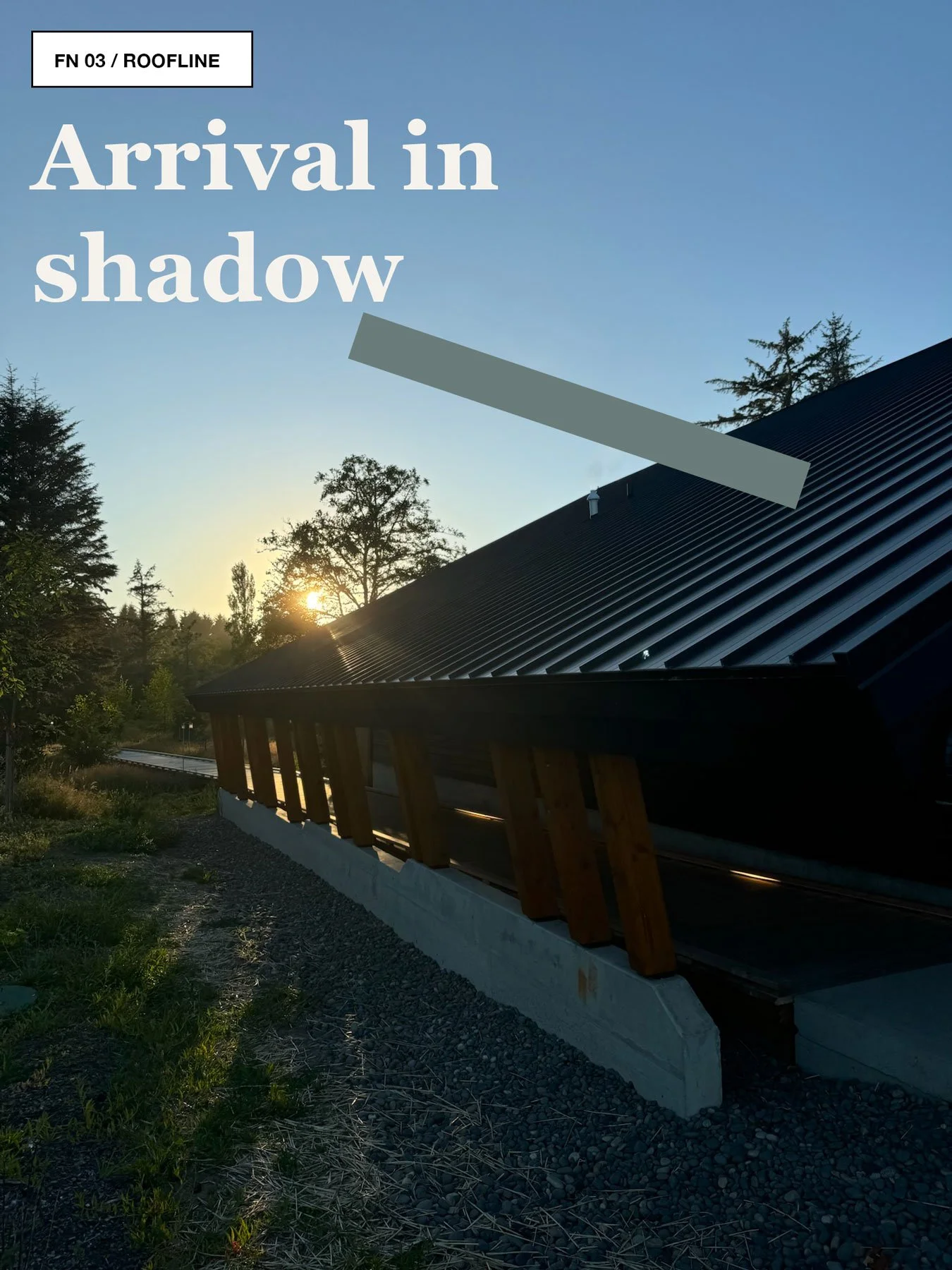
A low roofline, warm light, and the first architectural threshold.
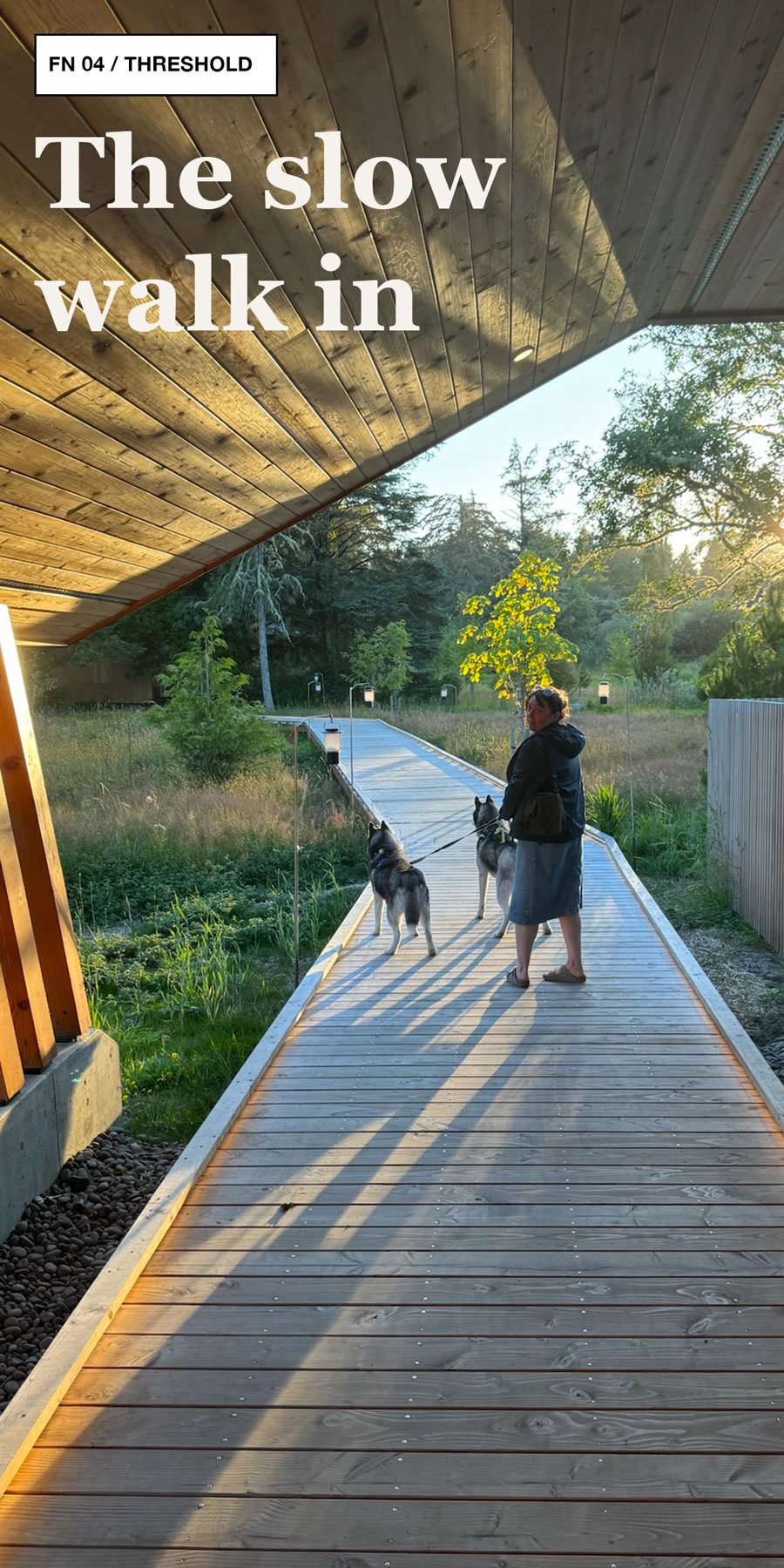
A covered walkway slows the arrival sequence.
The first impression is restraint.
Instead of a typical vehicle-dominated campground, the site is organized around a slower arrival. Snow Peak describes Long Beach Campfield as a car-free campground where guests park near the Gatehouse and use carts to move gear to their sites.
That one decision changes the rhythm of the place. Gravel paths become more than circulation. They become a filter between road speed and field speed.
The architecture reinforces that transition. Long timber walls, low rooflines, covered walkways, and narrow openings create a sequence of compression and release. You move from shadow to meadow, from boardwalk to gravel, from enclosed corridor to sky.
Nothing is overexplained. The details are legible because they are quiet.
Jyubako as Object
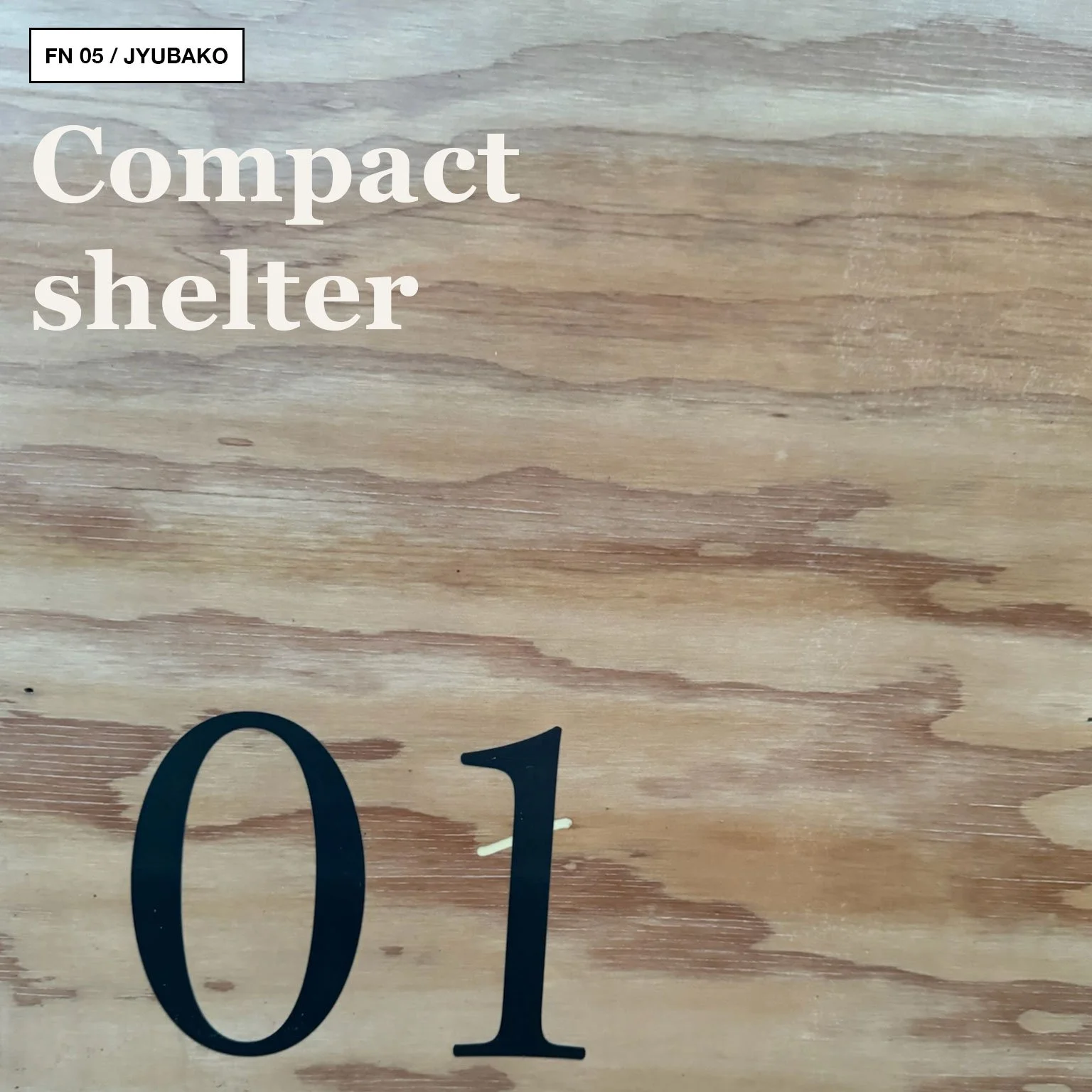
Jyubako 01: compact shelter as coastal object.
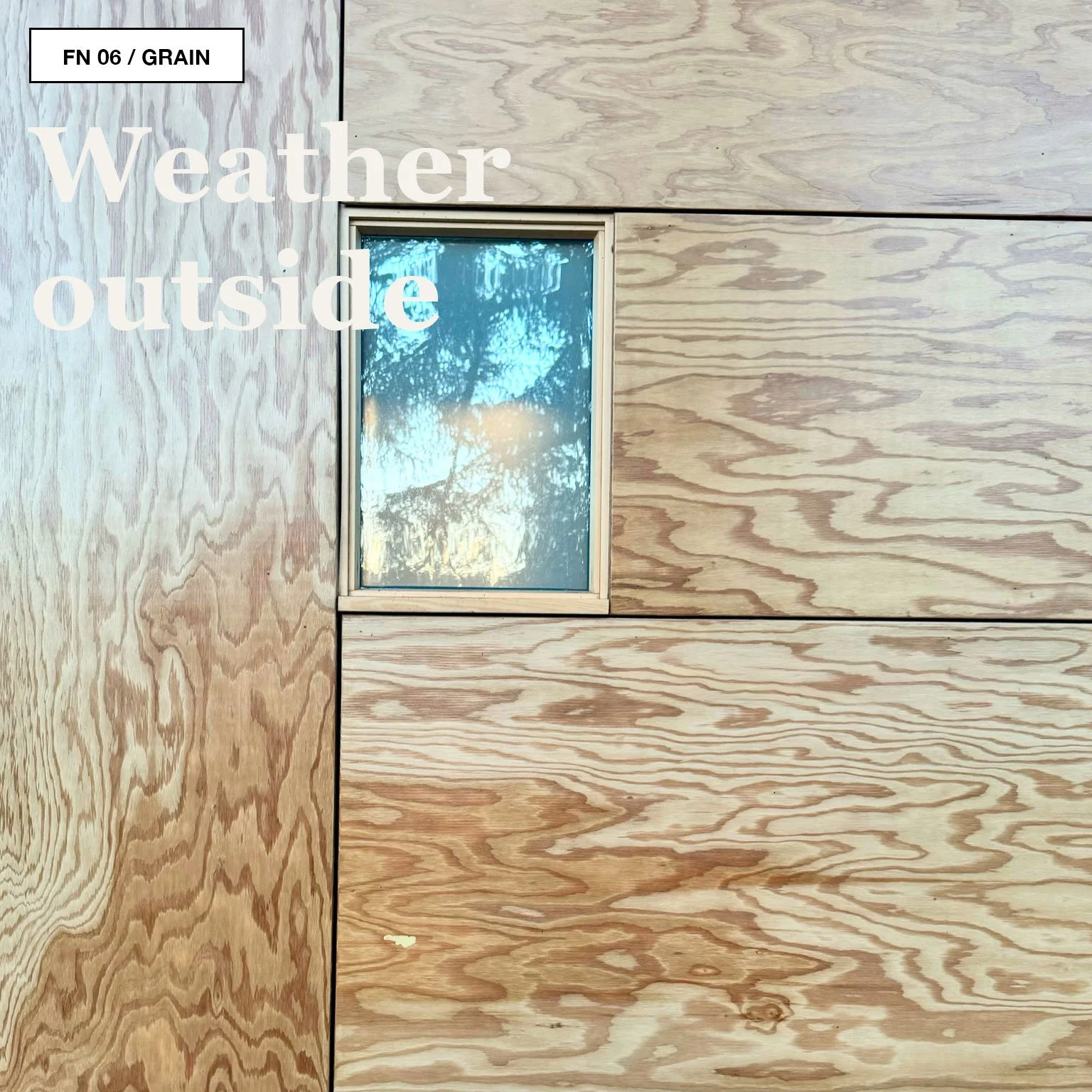
Pale grain, small window, warm interior: the cabin as field instrument.
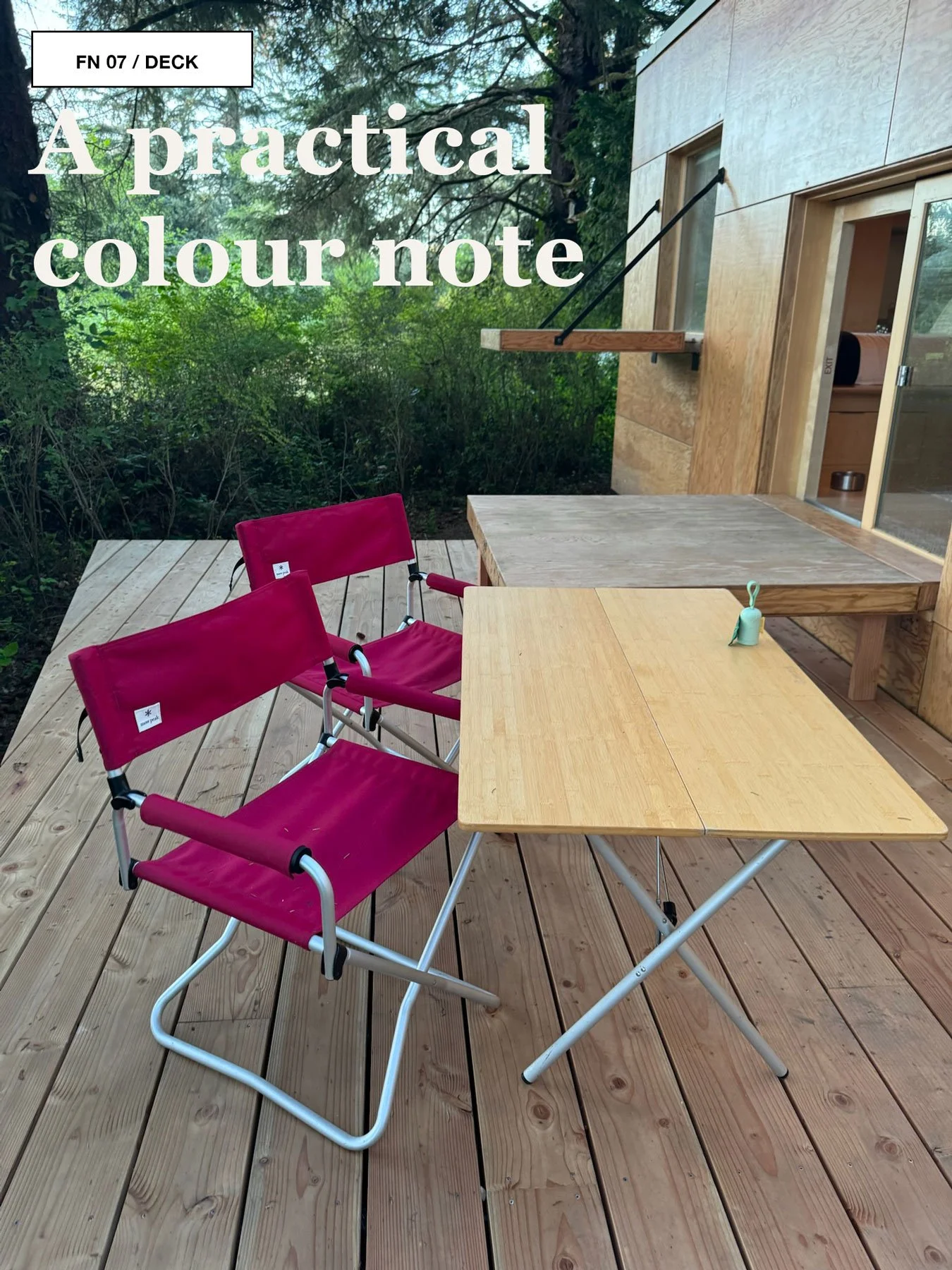
Camp furniture as colour note: practical, bright, temporary.
The Jyubako cabins read almost like field instruments.
Their pale timber faces, numbered doors, compact volumes, and crisp thresholds give them a portable quality, somewhere between cabin, crate, and architectural sample. The cabin is not trying to mimic wilderness. It is deliberately placed within it.
That distinction matters for the Field Guide direction.
The visual language should not romanticize the coast as untouched scenery. It should show the conversation between wild systems and human tools: plywood, canvas, gravel, stainless steel, rope, cedar, smoke, sand, rain, grass.
Inside, the palette stays restrained: pale wood, warm light, soft upholstery, low furniture, and framed views. The room is not decorated so much as tuned. A small window becomes a weather instrument. A ledge becomes storage. A lamp becomes atmosphere.
The design is functional, but it also knows how to hold stillness.
Camp as Landscape System
The coastal setting gives the project its real weight.
The site sits in a layered Pacific Northwest condition: wetland, shore pine, meadow, gravel, dune, ocean air. Snow Peak describes Campfield as a four-season campground designed around slowing down, connecting, and being with nature.
In practice, that philosophy becomes most convincing in the in-between spaces, a mown path through tall grass, a low tent form under trees, a fire ring holding the last trace of ash, a wash station with clear iconography and stainless utility and a communal table under warm pendants.
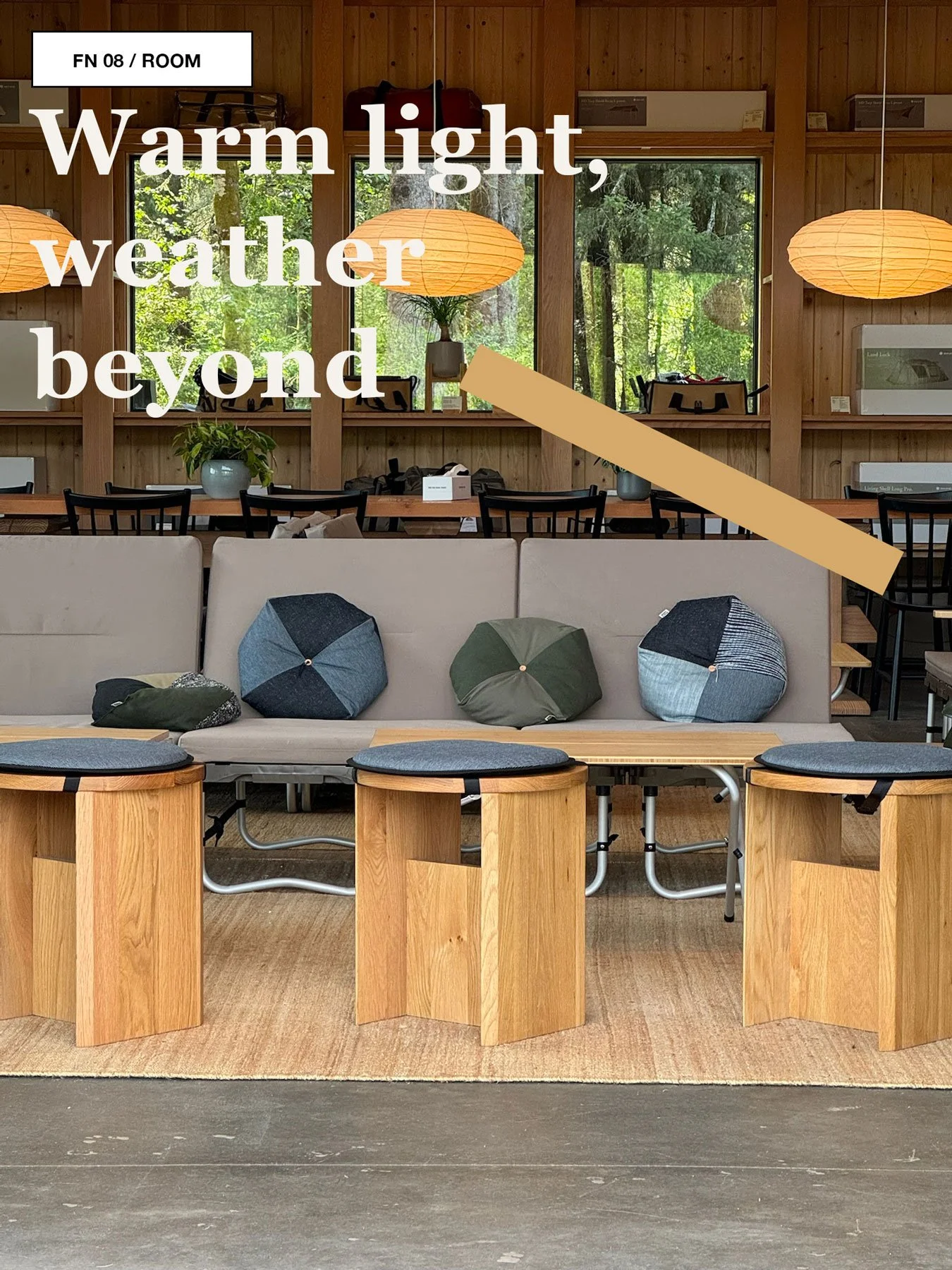
A communal room tuned by warm light, low furniture, and the view beyond.
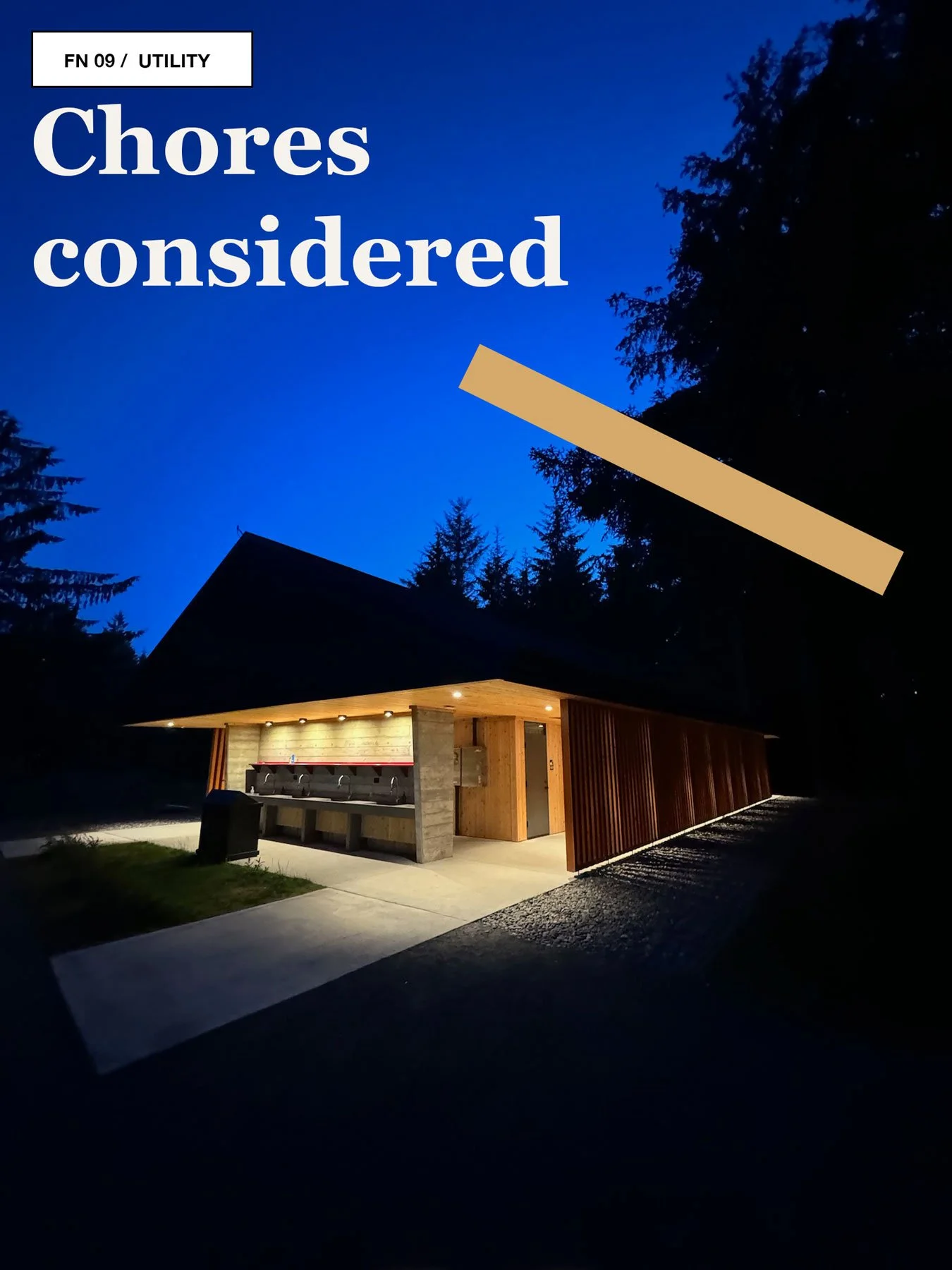
Utility zones designed with the same care as guest spaces.
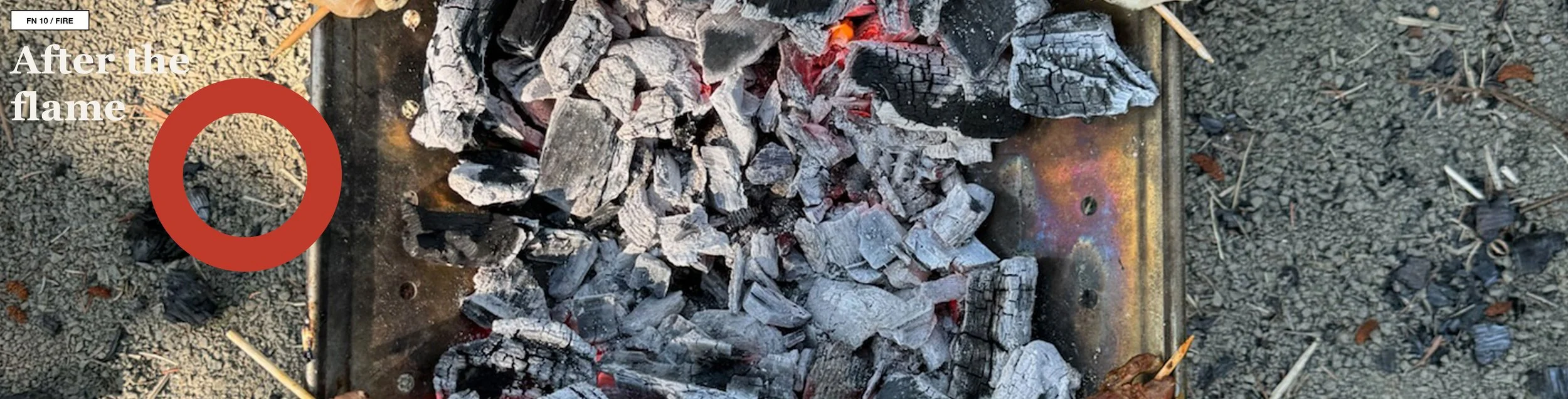
Fire as residue, not spectacle.
The coastal setting gives the project its real weight.
The site sits in a layered Pacific Northwest condition: wetland, shore pine, meadow, gravel, dune, ocean air. Snow Peak describes Campfield as a four-season campground designed around slowing down, connecting, and being with nature (Snow Peak Campfield).
In practice, that philosophy becomes most convincing in the in-between spaces.
A mown path through tall grass. A low tent form under trees. A fire ring holding the last trace of ash. A wash station with clear iconography and stainless utility. A communal table under warm pendants.
These details matter because they make the camp feel maintained without being overcontrolled. The landscape is not polished into a resort surface. It is edited just enough for use, then allowed to remain coastal.
For Kelp Field Notes, this is the strongest editorial angle: Snow Peak Campfield as a study in designed restraint. It offers a way to talk about outdoor living that is less about rugged performance and more about spatial literacy.
Where do you put your body? Where does gear belong? How does a path guide behaviour? How does a fire gather people without needing signage?
The best details at Campfield are the ones that disappear into use: the path, the ledge, the hook, the deck edge, the chair left ready for morning.
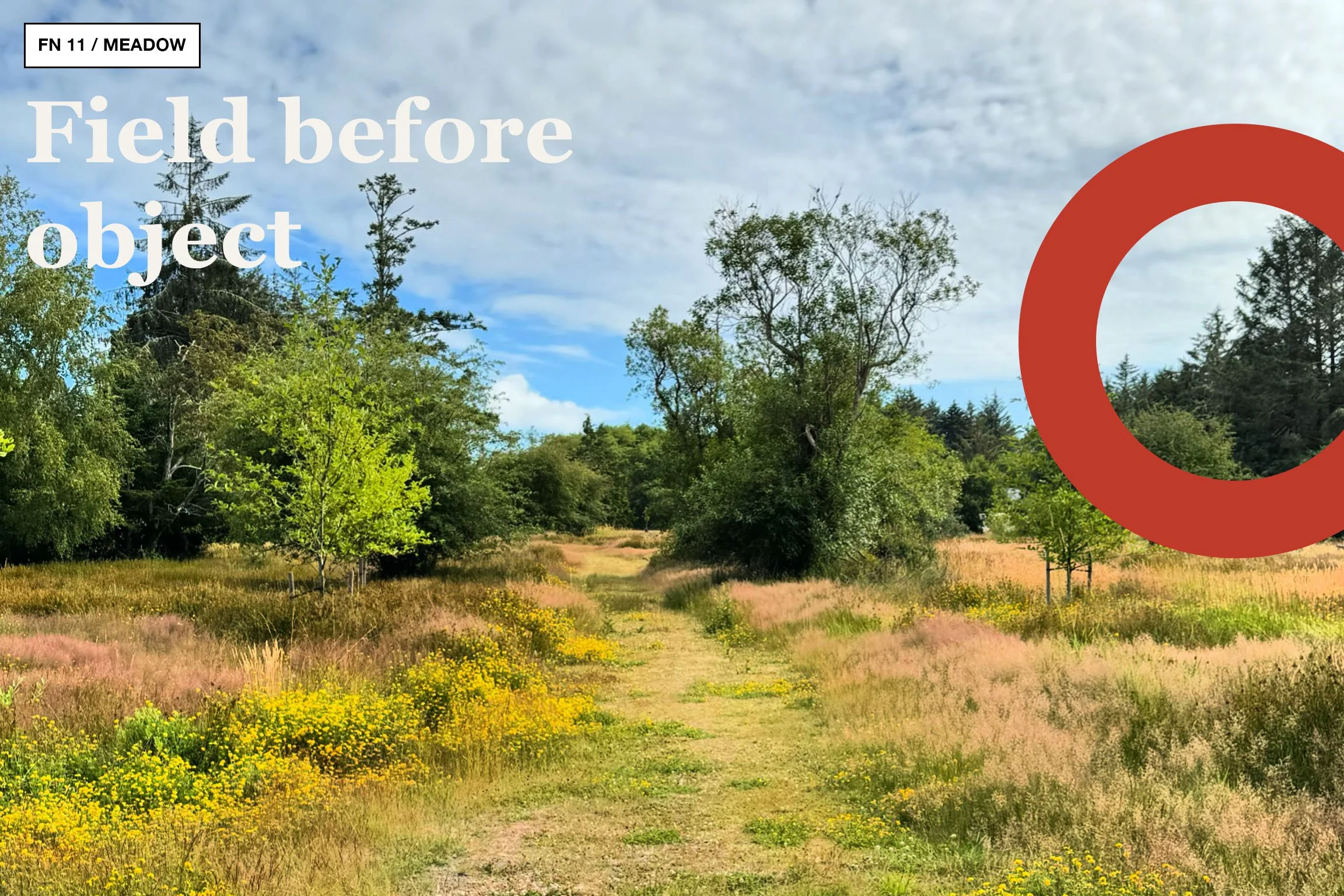
The meadow holds the architecture at a distance.
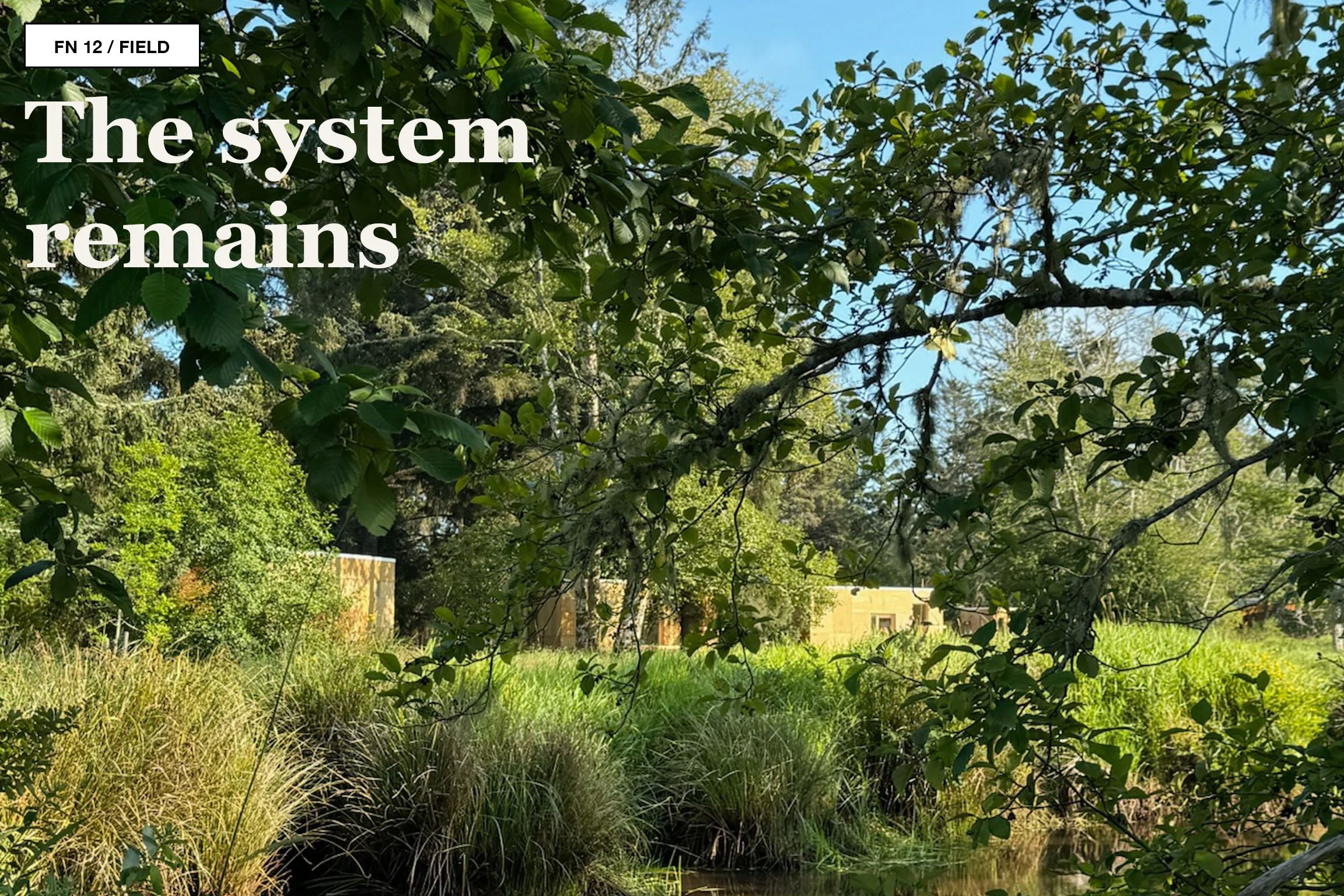
Water, grass, shadow: the coastal system below the design language.